Spend $675 to unlock your gift!
$0
$90
Free Shipping
$675
Baking Sheet Duo
($120 Value)
Your Cart is Empty
Get started with the Caraway essentials!
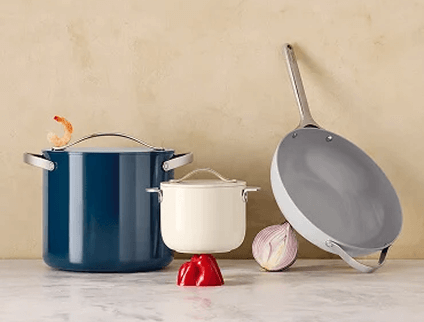
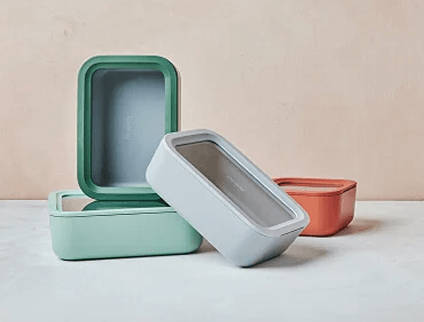
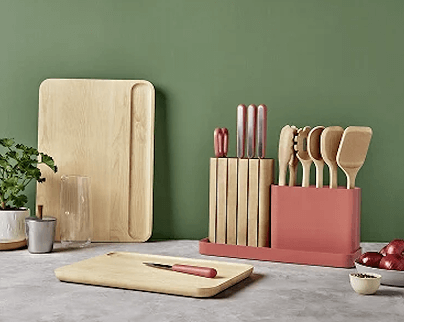
Free Shipping On Orders $90+
Free Returns
30-Day Trial
Home & Kitchen with Caraway
Key Takeaways
"Non-toxic" isn't a regulated term, so the real question is what physically coats your pan and whether the brand can prove what's in it.
Ceramic-coated, stainless steel, and cast iron are the three materials most worth knowing, and each shines in a different part of your kitchen.
Third-party testing is the difference between a marketing claim and actual proof, which is why it's the first thing to look for.
If you've gone shopping for pots and pans lately, you already know the word "non-toxic" is plastered on basically everything. And here's the frustrating part: the term isn't actually regulated, so it can mean almost anything a brand wants it to mean.
At Caraway , this is the whole reason we exist. We started with cookware because the kitchen felt like the most urgent place to clean up, and we've spent a lot of time thinking about what "non-toxic" actually means when you're the one cooking dinner on it every night.
Here's what makes cookware genuinely non-toxic, which materials are worth your money, and how to tell the real deal from the marketing.
Let's start with the truth: there's no official, regulated definition of "non-toxic cookware." No government agency hands out a certification. That means the label alone tells you almost nothing, and you have to look at what's physically in the pan instead.
A genuinely non-toxic pan doesn't transfer “forever chemicals” from the coating into your food, doesn't let heavy metals like lead or cadmium migrate out of a glaze, and doesn't have a surface that breaks down into particles you end up eating. The gold standard is simple: the brand tells you exactly what the cooking surface is made of, and they back it up with third-party testing you can actually see.
Before we get into materials, it helps to know what you're trying to avoid.
The big one is PFAS, short for per- and polyfluoroalkyl substances. These are a large family of synthetic chemicals nicknamed "forever chemicals" because they don't break down easily in the body or the environment .
PTFE (the coating better known as Teflon) belongs to this family, and so does PFOA, an older chemical used to make it. Long-term PFAS exposure has been linked to immune system dysfunction, developmental effects, and increased cancer risk.
Then there are heavy metals. Lead and cadmium sometimes show up in the colored glazes of cheap or low-quality cookware, particularly in bright reds, oranges, and yellows. Both are genuinely dangerous, especially for kids, since long-term cadmium exposure can build up in the kidneys, and exposure to lead carries serious risks of its own.
Here's the good news: you have real options, and they're not complicated once you understand what each one does well.
Let's walk through the three that matter most.
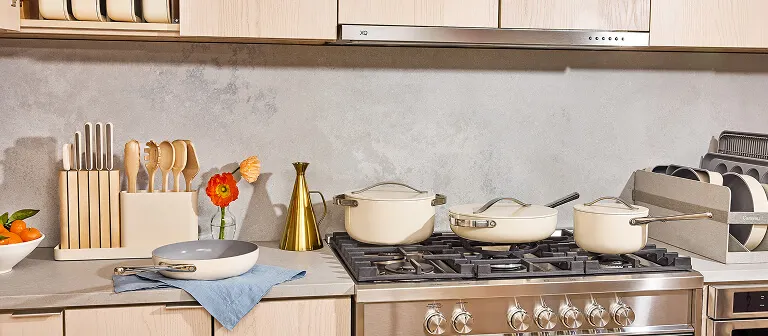
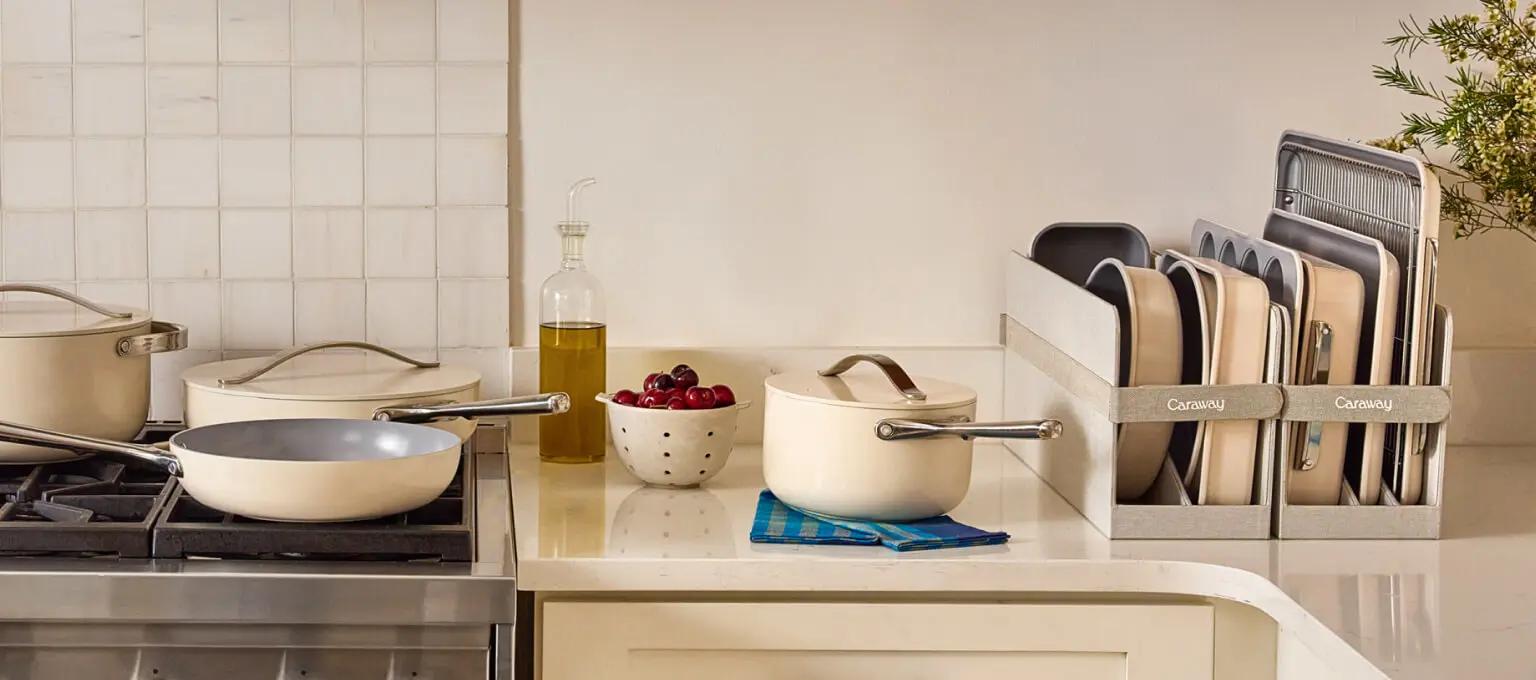
Ceramic-coated cookware is the easiest entry point into non-toxic cooking, and it's what we're best known for. A metal core (usually aluminum) is coated with a mineral-based, naturally slick surface that gives you the easy release of traditional nonstick without the PTFE or PFOA.
This is the material to reach for when you want convenience. Eggs slide right off, cleanup takes seconds, and you can cook with barely any oil. Our Cookware Set is built on a recycled aluminum core with a stainless steel base plate, and every piece is third-party tested for over 200 types of PFAS and 20+ heavy metals. It's oven-safe to 550°F and works on every stovetop, including induction.
The one honest tradeoff: ceramic coatings don't last forever. With gentle care (low-to-medium heat, wooden or silicone utensils, hand washing), you'll get years of great performance, but the coating will eventually wear. When it does, it simply stops being nonstick. It's not shedding anything harmful on the way out, which is the whole point.
Best for: everyday cooking, eggs, delicate foods, low-to-medium heat, and anyone who wants easy cleanup.
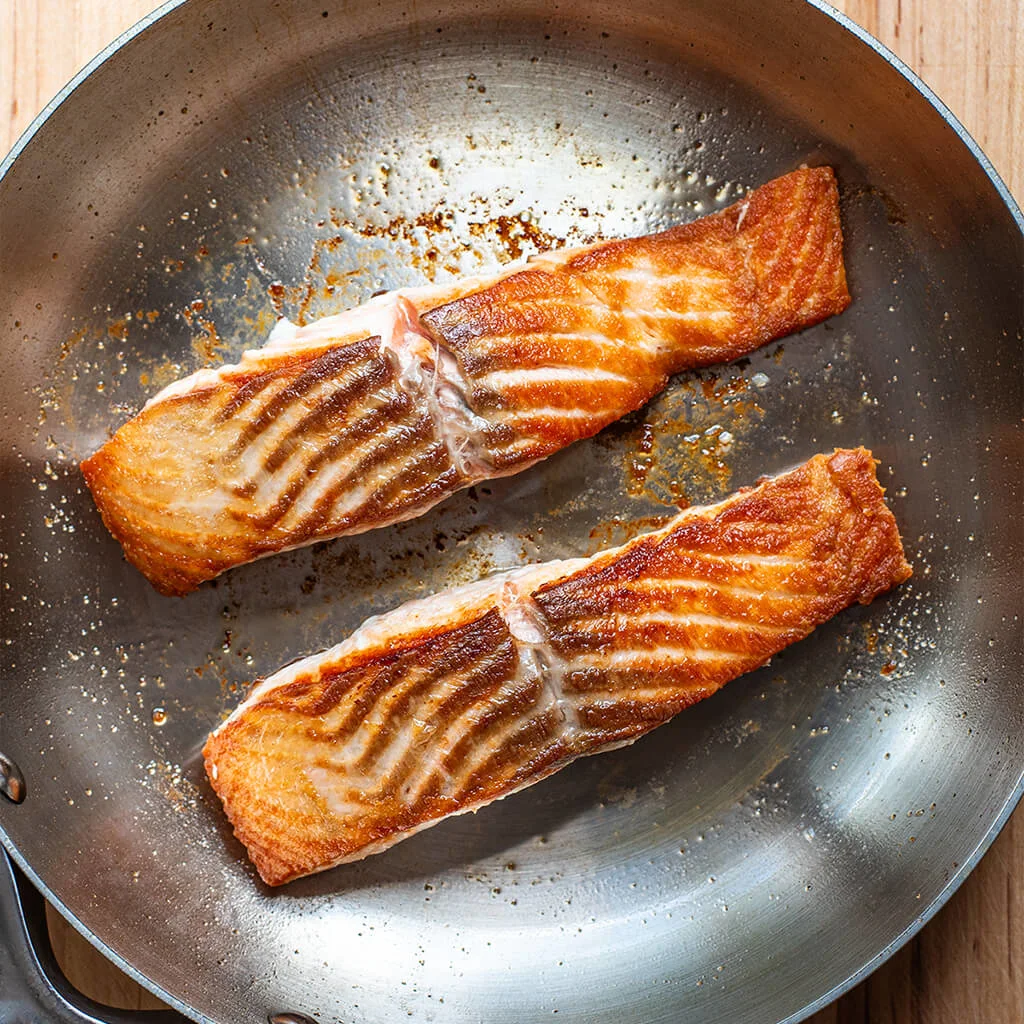
Stainless steel is the workhorse. It's non-reactive, incredibly durable, and relies on no coating whatsoever, which means there's nothing to wear down, flake, or off-gas. A quality piece can genuinely last decades.
This is what you want for searing, browning, building pan sauces, and cooking acidic dishes like tomato sauce or wine reductions, which can slowly wear down a coated pan. Our Stainless Steel Cookware is 5-ply, with an aluminum core sandwiched between stainless steel for even, responsive heat. It comes with a Limited Lifetime Warranty because it's built to stick around.
The tradeoff here is the learning curve. Food sticks if the pan isn't properly preheated, and you'll use a bit more oil than you would with a ceramic pan. But once you get the technique down (preheat, then add oil, then add food), it becomes second nature.
Best for: high-heat searing, acidic foods, long-term durability, and cooks who don't mind a little technique.
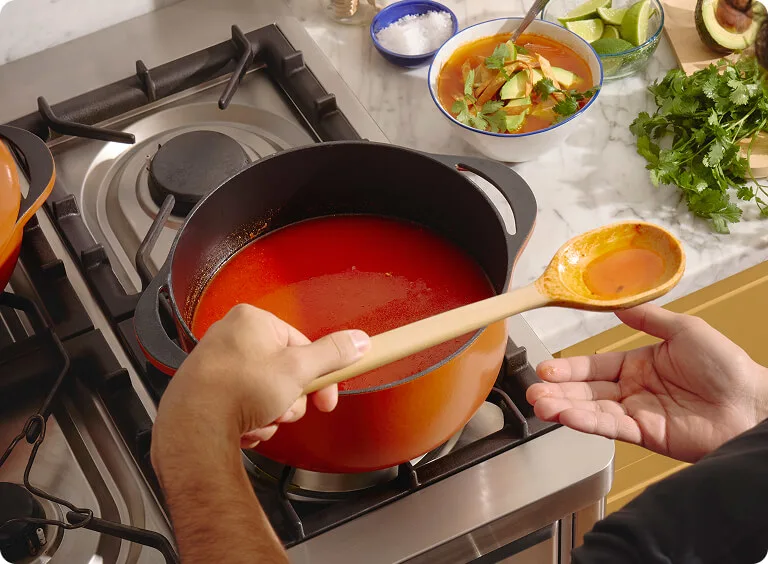
Cast iron has been around for generations for a reason. It's naturally non-toxic since there's no synthetic coating involved at all, just solid iron that develops a naturally nonstick surface as you season it with oil and heat. It holds heat beautifully, which makes it unbeatable for searing steaks, baking cornbread, and anything that needs steady, high heat.
There's even a small bonus: cooking acidic, moisture-rich foods in cast iron can add trace amounts of dietary iron to your meal, which can be a genuine plus for people who need more of it.
The tradeoffs are real, though. Cast iron is heavy, heats up slowly, and requires ongoing maintenance: hand-washing only, a light coat of oil after each use, and thorough drying to prevent rust. If you love acidic dishes, it's also not ideal, since tomato sauce and citrus can strip the seasoning over time.
Best for: high-heat searing, baking, oven-to-stovetop dishes, and cooks who don't mind the upkeep.
Enameled cast iron deserves a quick mention because it solves a couple of cast iron's biggest headaches. It's a solid cast iron core with a glass enamel coating fused on top, which means it never needs seasoning, and it's non-reactive, so acidic dishes are totally fine.
This is the material for slow-cooked meals: braises, stews, soups, and no-knead bread. Our Enameled Cast Iron Dutch Oven offers generations-long durability with a coating that's ready to use right out of the box, and it comes with a lifetime warranty. Just know it carries the same weight as regular cast iron, so a full Dutch oven is a genuine two-hands situation.
You don't have to overhaul everything overnight. The smartest approach is to replace pans as they wear out, starting with the ones you use most.
For most kitchens, that means a ceramic fry pan for daily eggs and sautés, a stainless steel pan for searing, and a Dutch oven for the slow stuff. Our Cookware Set covers the ceramic everyday essentials in one shot (fry pan, sauce pan, sauté pan, and Dutch oven), and you can add stainless steel or enameled cast iron for the high-heat and slow-braise jobs.
Toss in a set of birch wood utensils to protect your coated pans, and you've got a genuinely non-toxic kitchen that'll serve you for years.
"Non-toxic" isn't a magic word, and it isn't regulated, so the label alone can't be trusted. What can be trusted is knowing what physically coats your pan and seeing the testing that backs it up.
Ceramic for everyday ease, stainless steel and cast iron for high-heat durability, and third-party testing as your north star. Get those three things right, and you've got cookware you can genuinely feel good about, every single time you cook.
Ready to make the switch? Our Cookware Set is third-party tested, built to last, and made without the stuff you don't want near your food.
There's no single winner, since it depends on how you cook. Ceramic-coated, stainless steel, and cast iron are all considered non-toxic when used properly. Ceramic is best for everyday nonstick cooking, while stainless steel and cast iron are best for high-heat cooking and long-term durability. The most important factor is choosing a brand that discloses its materials and provides third-party testing.
Quality ceramic cookware is made from mineral-based materials without PFAS, PTFE, PFOA, lead, or cadmium. That said, quality varies a lot by brand, and cheaper versions can cut corners in the layers beneath the coating. Look for third-party testing rather than relying on the word "ceramic" alone.
Neither is universally better. They solve different problems. Ceramic provides nonstick convenience for everyday cooking, but the coating wears down over time. Stainless steel has no coating at all and lasts for decades, but it requires a little more technique and a bit more oil. Most people benefit from having both.
Sources:
Per- and Polyfluoroalkyl Substances (PFAS) | National Institute of Environmental Health Sciences
Forever Chemicals (PFAS) and Your Health | Cleveland Clinic
Cadmium ToxFAQs | CDC / Agency for Toxic Substances and Disease Registry
Does Cooking with Cast Iron Pots and Pans Add Iron to Our Food? | Go Ask Alice, Columbia University
Spend $675 to unlock your gift!
$90
Free Shipping
$675
Baking Sheet Duo
($120 Value)
Get started with the Caraway essentials!
Free Shipping On Orders $90+
Free Returns
30-Day Trial
Spend $675+ to unlock your free gift!
Exclusive Baking Sheet Duo for orders $675+
$90
Free Shipping
$675
Baking Sheet Duo
($120 Value)
Spend $675+ to unlock your free gift!
Exclusive Baking Sheet Duo for orders $675+
$90
Free Shipping
$675
Baking Sheet Duo
($120 Value)
