Your Cart is Empty
Get started with the Caraway essentials!
Free Shipping On Orders $90+
Free Returns
30-Day Trial
Home & Kitchen with Caraway
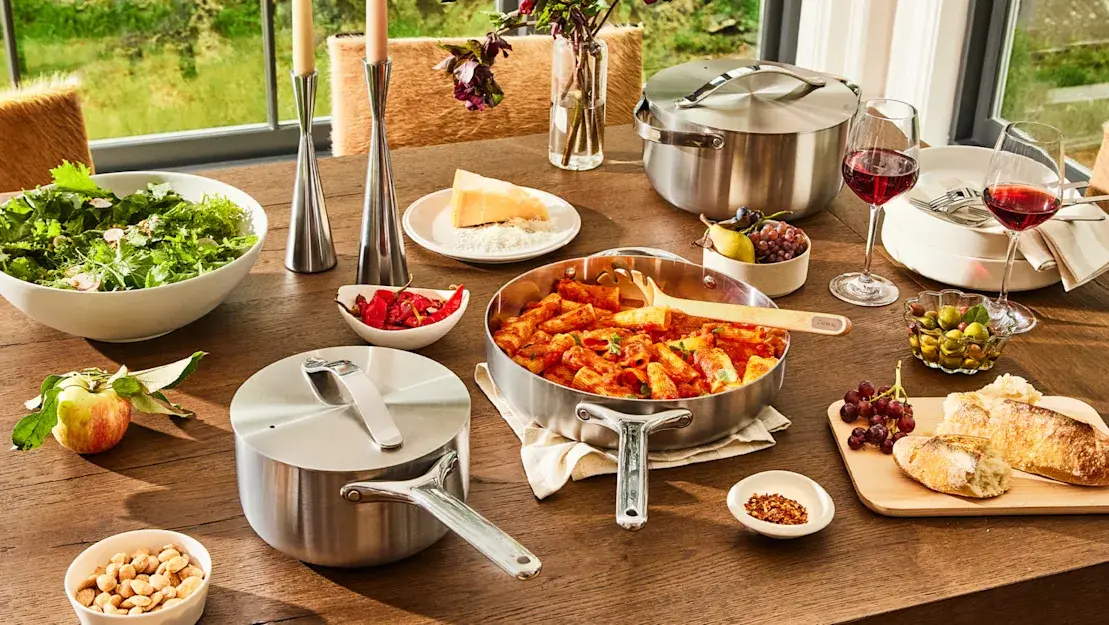
At Caraway , we're all about making cooking less of a chore and more of a joy. In this guide, we'll cover why food sticks (and how to stop it), heat management across stovetop types, the best and worst foods for stainless, deglazing, oils, oven use, and cleanup.
Stainless steel appears perfectly smooth, but at a microscopic level, it is actually covered with tiny ridges, pits, and pores. When cold protein (like chicken straight from the fridge) hits that cool, textured surface, it bonds with the metal almost immediately. That bond is what we recognize as sticking, and it's literally a chemical reaction between the food and the pan.
Here's the trick: when you preheat the pan, the metal expands, and those microscopic pores tighten into a much smoother surface. At around 370°F, water and the moisture in food begin to vaporize on contact, creating a thin insulating layer of steam called the
Leidenfrost effect . That steam layer is what lets your food glide instead of stick.
Caraway's 5-ply stainless steel is built with an aluminum core that distributes heat evenly across the entire pan, which means the Leidenfrost effect activates consistently rather than just in one hot spot.
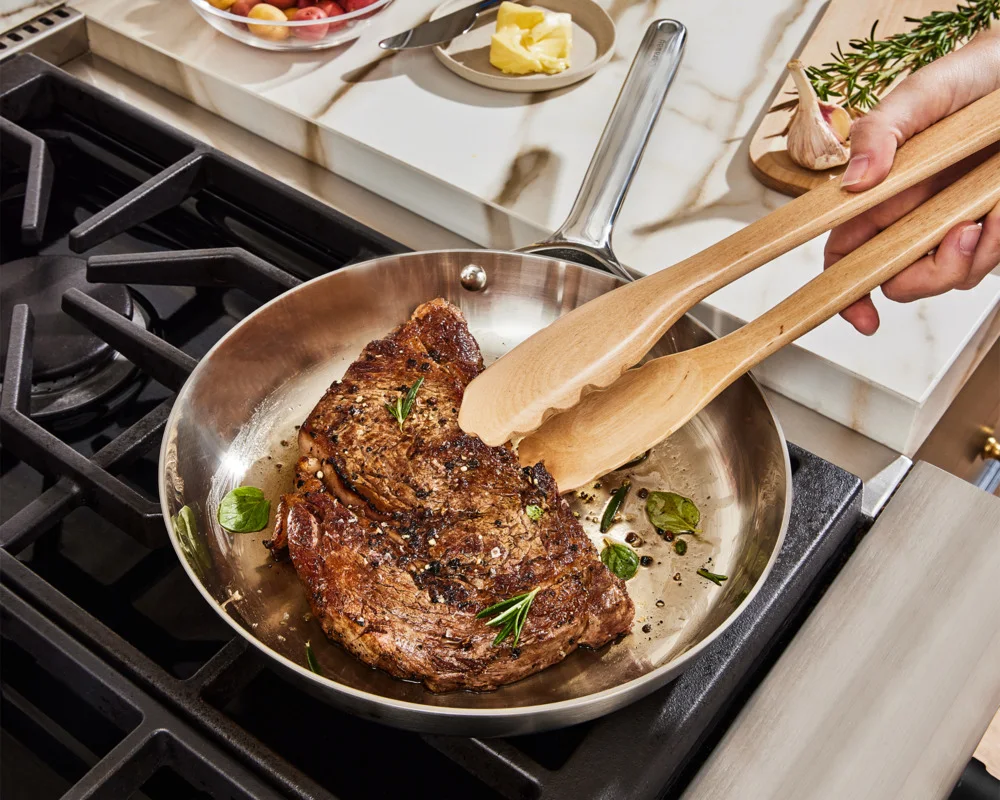
Stainless steel is incredibly functional for a wide array of dishes. Here’s when it truly excels:
For the perfect sear: Craving that crispy exterior on your steak or tofu? Stainless steel gets hot and stays hot, making it your go-to for that golden-brown deliciousness.
Veggies that pop: Whether you’re aiming for tender-crisp asparagus or perfectly browned mushrooms, stainless steel provides the even heat you need.
Sauces and reductions: Thanks to its non-reactive nature, you can simmer tomato sauce or reduce a balsamic glaze without worrying about any metallic taste sneaking in.
Slow and low: Soups, stews, and anything requiring patience benefit from the consistent heat distribution, ensuring your dish cooks evenly without scorching.
Deglazing made easy: Those tasty bits left after searing meat? They turn into magic when deglazed with a bit of wine or broth, adding depth to any sauce or gravy.
Pan sauces and fond: Those browned bits left in the pan after searing meat are called fond, and they're pure flavor. A splash of wine, stock, or even water plus a wooden spoon turns them into an instant sauce that takes a basic protein into restaurant territory.
Stovetop-to-oven finishes: Our 5-ply stainless steel is
oven safe up to 550°F , which means you can sear a steak on the stove and finish it in the oven without switching pans. The same goes for skillet cornbread, frittatas, and bone-in chicken thighs.
Stainless steel handles most things beautifully, but a few foods do better elsewhere:
Delicate eggs. Scrambled eggs and omelets are possible, but they're the highest-skill food on stainless. Check out our guide on
how to cook eggs in a stainless steel pan if you want to try, but ceramic is honestly easier here.
Sticky or starchy foods. White rice, fresh pasta straight into the pan, or oatmeal at high heat are prone to sticking even when you do everything right. Our
Ceramic Cookware handles these without drama.
Flaky fish. Sole, flounder, and tilapia are too delicate to wait through the natural-release window. Reach for our
Ceramic Fry Pan for these instead.
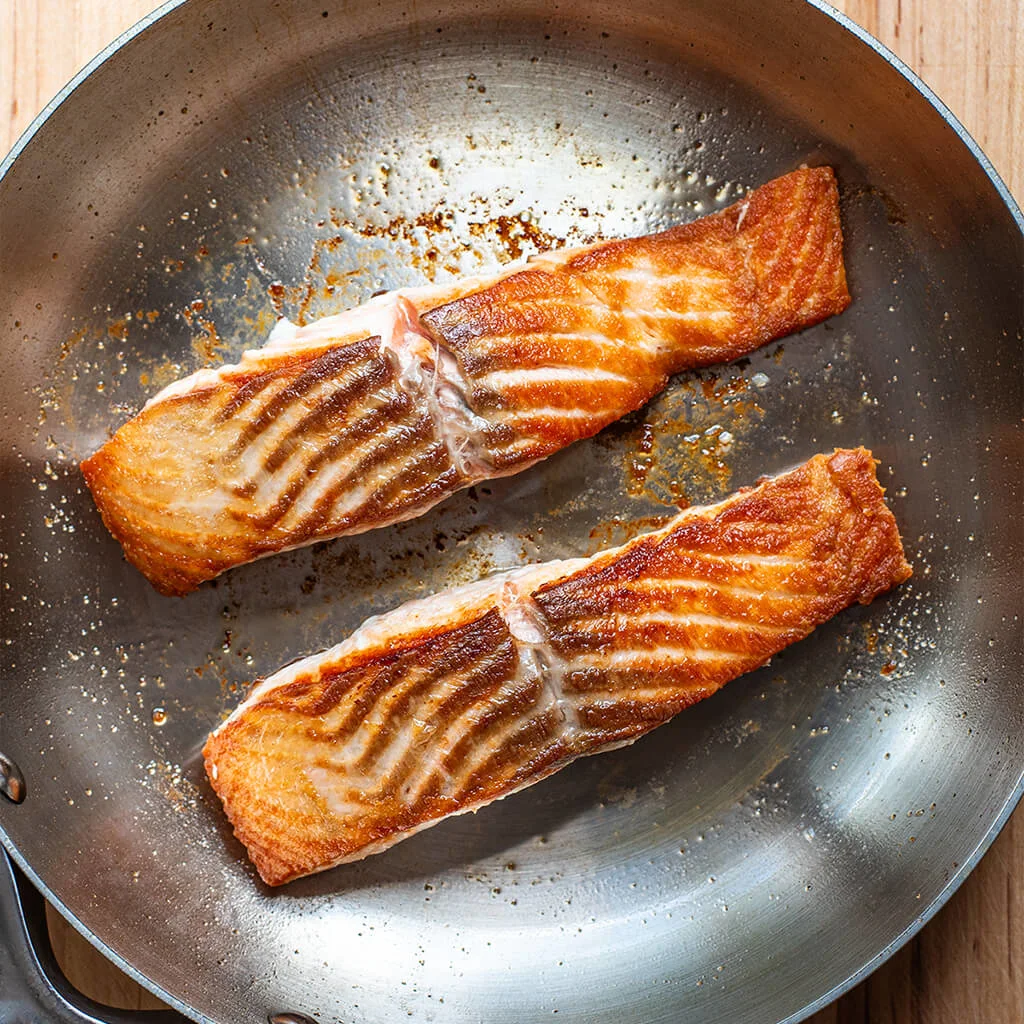
Mastering stainless steel comes down to a repeatable sequence. Once you have it down, it becomes second nature.
Step 1: Bring food to room temperature. Cold protein straight from the fridge crashes your pan's temperature and breaks the Leidenfrost effect before it has a chance to do its job. Let proteins sit on the counter for 15 to 20 minutes before cooking. This single step makes a bigger difference than most people realize.
Step 2: Preheat the empty pan on medium for 2 to 3 minutes. No oil yet. The pan needs to come up to temperature first. Starting with oil at this stage burns the oil and creates a sticky residue. Empty pan, medium heat, set a timer.
Step 3: Run the water test (Leidenfrost test). Flick a few drops of water onto the pan. If they sizzle and evaporate slowly, the pan is too cold. If they sputter and disappear instantly, it's too hot. If they form mercury-like balls that dance and glide around the surface, you've hit the
Leidenfrost effect at around 370°F. That's your green light.
Step 4: Add oil and wait for shimmer. Pour in 1 to 2 tablespoons of high-smoke-point oil and swirl to coat. Give it 30 to 60 seconds. When the oil shimmers and moves like water across the pan, you're ready for food.
Step 5: Add food in a single layer. Don't crowd the pan. Crowding drops the temperature, traps steam, and turns a sear into a soggy sauté. Cook in batches if you need to, even if it takes a little longer.
Step 6: Wait for the natural release. Allow food to cook undisturbed. Stainless steel will release food once it's developed a sufficient sear. If it's stuck, it's not done yet. Give it another 30 to 60 seconds and try again.
Step 7: Deglaze and lift the fond. Once you've removed your food, pour a splash of wine, stock, or water into the still-hot pan. Scrape the browned bits with a wooden spoon and you've got an instant pan sauce, plus a much easier cleanup.
How your stainless steel performs depends a lot on what you're cooking on.
Gas stoves offer the fastest temperature response, which makes them the easiest to dial in mid-cook. The flame should hug the pan base, not lick up the sides. If it's spilling over, you're wasting heat and risking warped handles over time.
Electric coil and smoothtop stoves retain heat even after you've turned the dial down. The best workaround: lower the heat 30 to 60 seconds before you actually want it lower. Plan ahead and the pan will catch up with you instead of running hot when you didn't want it to.
Induction stoves are the most precise of the bunch. Our 5-ply construction is fully induction-compatible, and because induction transfers heat directly to the pan, preheat times drop to 60 to 90 seconds. You'll also want to dial down faster since the pan responds almost instantly to changes.
Oil choice matters more than people realize. The right oil supports the Leidenfrost effect and keeps food from sticking. The wrong one smokes, burns, or breaks down before your food is even ready.
For high-heat searing (above 400°F): Avocado oil has a
smoke point near 520°F , making it ideal. Refined grapeseed (~420°F) and ghee both hold up well, too.
For medium heat: Refined olive oil and canola work nicely.
Skip for searing: Butter browns at around 350°F, so save it for finishing sauces or low-heat sautéing. Extra virgin olive oil has too low a smoke point for high-heat work.
How much: One to two tablespoons is enough to fully coat the surface of a 10.5" Caraway Fry Pan.
One of the best things about stainless steel is that you don't have to dirty a second pan to finish a dish in the oven. Our 5-ply stainless steel is rated
oven safe up to 550°F , which covers basically every recipe you'd want to make.
Quick temperature guide by food:
350°F: Delicate fish, custards, slow-baked dishes
400°F: Chicken, pork, casseroles
450 to 500°F: Steaks, roasts, finishing a hard sear
One important note: the handle gets hot the same as the pan. Always grab a mitt, even if the pan was only in the oven briefly.
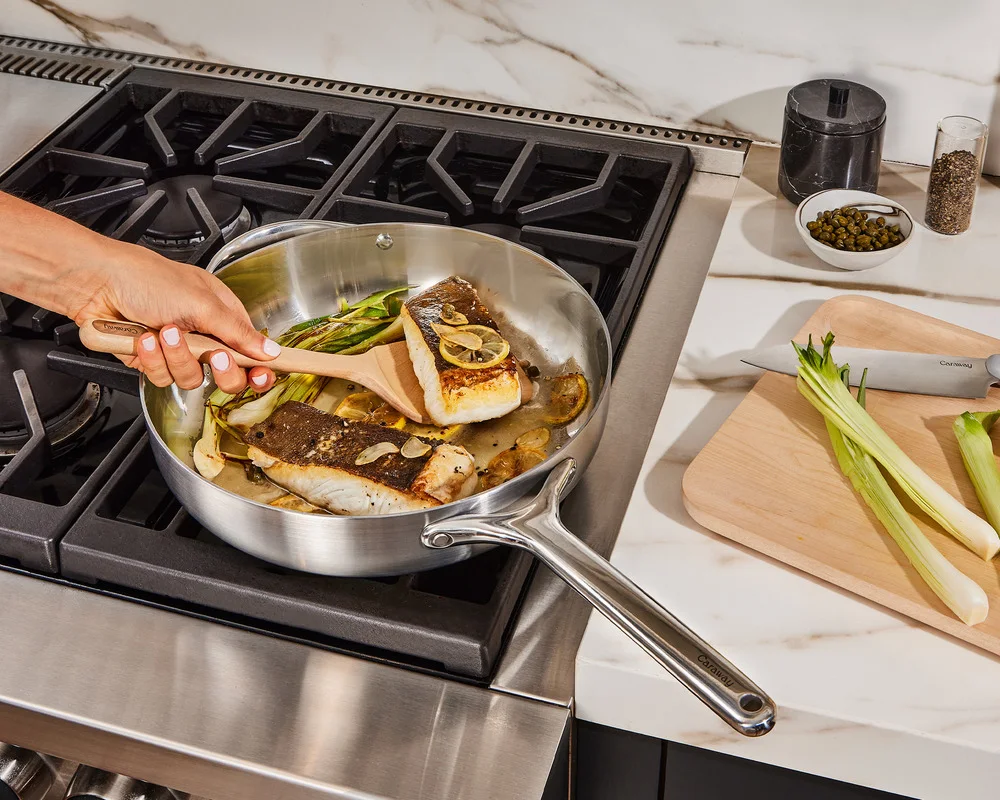
A stainless steel fry pan is an incredibly versatile tool in the kitchen, perfect for everything from searing meats to sautéing vegetables.
Here’s how to use it effectively:
Our Stainless Steel Fry Pan excels with foods that are enhanced when cooked to a delicious sear or crust, such as steaks, chicken breasts, and dense vegetables. These foods develop a delicious crust when cooked in a properly heated and oiled pan.
Give your food plenty of space in the pan. Crowding can lower the pan's temperature too quickly, leading to sticking and uneven cooking.
When it’s time to flip your food, use a sturdy wooden spatula to lift and turn it. This tool is best for getting under the food without breaking that crucial sear that prevents sticking.
Cooking with stainless steel pots introduces a realm of possibilities, from boiling pasta to simmering hearty stews.
Here’s how to make the most of these versatile kitchen tools:
When boiling water for pasta or vegetables, start with cold water in your stainless steel pot. This ensures even heating and reduces the risk of food sticking.
The beauty of stainless steel pots lies in their ability to distribute heat evenly. For slow-cooked dishes, bring your liquid to a boil, then reduce to a simmer. The consistent temperature will cook your food thoroughly without the need for constant stirring.
Keeping the lid on will speed up the cooking process by retaining heat, but if you’re looking to reduce your sauce or thicken a stew, leave the lid off. This will allow evaporation and concentration of flavors.
Real-time problems, real-time fixes:
Food won't release? Don't force it. Wait 30 to 60 more seconds. A sufficient sear releases on its own.
Pan is smoking? Too hot. Pull the pan off the burner for 30 seconds, lower the heat by one notch, and return it to the burner.
Stuck-on residue after cooking? Deglaze immediately with water while the pan is still warm. Everything lifts in seconds.
Rainbow or blue tint on the surface? Not damage, just heat oxidation from high heat. A little Bar Keepers Friend and a soft sponge restore the original shine.
Proper care is key to ensuring your stainless steel cookware remains a staple in your kitchen for years to come.
Here’s how to keep your pots and pans in top condition:
Regular Cleaning: After cooking, let your stainless steel cool down before cleaning to avoid warping. Use warm, soapy water and a sponge to clean the surface. For stuck-on food, a mixture of baking soda and water can work wonders without damaging the finish.
Polishing: You can occasionally polish your stainless steel cookware with a specialized cleaner to keep that shine. However, this is more about aesthetics and doesn’t affect cooking performance.
Avoid Harsh Chemicals: While stainless steel is durable, harsh chemicals can cause discoloration and damage over time. Stick to gentle dish soap and avoid chlorine-based cleaners.
Storage: Store your stainless steel cookware in a dry place. If stacking pots and pans, use protectors or towels in between to prevent scratching. Our line of cookware includes storage options to keep your pants separate.
Cool before washing: Let the pan come to room temperature before rinsing. Cold water on a hot stainless steel pan can cause warping.
Hand wash to extend life: Our stainless steel is dishwasher-safe, but hand washing preserves the finish much longer.
For stuck residue: Deglaze while the pan is still warm, use a Bar Keepers Friend paste, or simmer a baking soda and water solution in the pan for 5 minutes to loosen it.
What to avoid: Steel wool, sudden temperature changes, and leaving acidic foods to sit overnight. All three can cause long-term pitting or warping.
Still have questions? We’ve got you covered.
Yes, stainless steel cookware is versatile and compatible with gas, electric, and induction stovetops, making it a flexible option for any kitchen.
Not with Caraway! Seasoning is not mandatory for our line of cookware. If using cast iron, doing so occasionally can support its non-stick properties, especially before cooking foods prone to sticking.
Ensure your pan is properly preheated, and use enough oil to coat the surface. Also, wait until the food releases naturally before attempting to flip or stir.
While many stainless steel items are dishwasher safe, hand washing is recommended to maintain the finish and integrity of the cookware over time.
Absolutely! One of the advantages of stainless steel is its non-reactive nature, making it safe for cooking tomato-based sauces or dishes with lemon and vinegar.
Stainless steel surfaces have microscopic pores that trap cold food on contact. When the pan is properly preheated (around 370°F), those pores tighten and a layer of steam forms between the food and the surface, allowing it to glide. Sticking usually means the pan wasn't hot enough, or the food was too cold when it went in.
Aim for 370 to 400°F. Use the water test to confirm: drops of water should form small balls that dance across the surface. If they sizzle and disappear, you're not there yet. If they sputter into nothing, you've gone too far.
Yes, but it takes practice. Eggs are one of the most stick-prone foods you can cook, so they require precise heat control and patience. Check out our guide on
how to cook eggs in stainless steel for the full method.
That's heat oxidation, which is purely cosmetic and totally harmless. Bar Keepers Friend and a soft sponge will restore the original shine in seconds.
Decades with proper care. Caraway stainless steel comes with a Limited Lifetime Warranty because it's genuinely built to last.
At Caraway , we believe in the power of quality cookware to transform your cooking experience. Stainless steel cookware allows for efficiency, versatility, and health in your cooking rituals. By understanding how to properly use and care for your stainless steel cookware, you're setting yourself up for culinary success that lasts.
Remember, good cooking starts with great tools, and with the
Caraway Stainless Steel Set , you're well-equipped to tackle any recipe with confidence and ease. Cook well, eat well, and live well.
Sources:
How to Season, Clean and Care for a Cast Iron Pan | KQED
Best Cookware Buying Guide | Consumer Reports
Understanding cooking oil smoke points | About Olive Oil
How to Tell if Your Stainless Steel Pan is Hot Enough Without a Thermometer | LifeHacker
Get started with the Caraway essentials!
Free Shipping On Orders $90+
Free Returns
30-Day Trial