Your Cart is Empty
Get started with the Caraway essentials!
Free Shipping On Orders $90+
Free Returns
30-Day Trial
Home & Kitchen with Caraway

Enameled cast iron cookware is a staple in many kitchens worldwide. With its vibrant colors and versatile cooking capabilities, it’s easy to see why.
With the rise in popularity comes an important question: Is enameled cast iron safe? Here, we’ll look into what enameled cast iron is, compare it to traditional cast iron, explore its benefits, and address any safety concerns to help you make an informed decision.
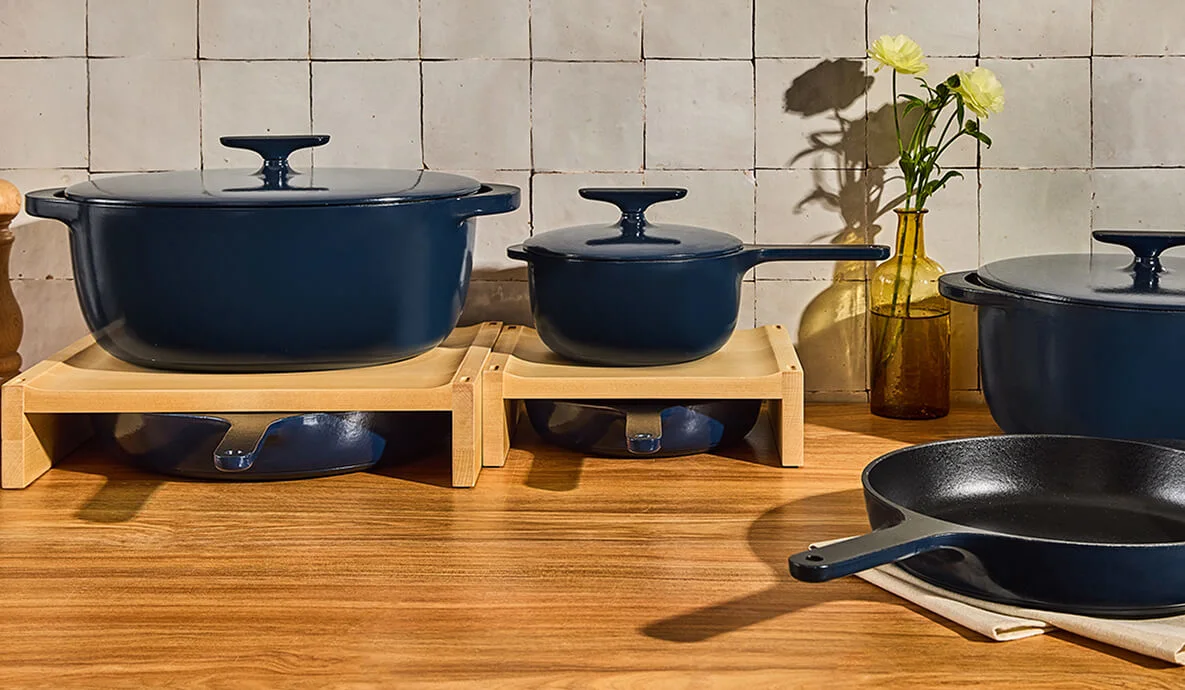
Enameled Cast Iron Cookware features a cast iron core coated with a layer of enamel. This enamel is typically made from glass and fused to the cast iron at high temperatures, creating a durable, non-reactive surface.
The enamel coating is fused to the cast iron at temperatures exceeding 1,400°F, which is what creates that smooth, glass-like cooking surface. At Caraway, we use a 3-layer enamel coating that's bonded to a recycled cast iron core, giving you a durable finish with a clean, modern look.
Because the surface is essentially glass on iron, it creates a mineral barrier between your food and the metal, which makes the cookware completely non-reactive. That's especially important when you're cooking with acidic ingredients, which we'll get into next.
Enameled cast iron Dutch ovens and frying pans are known for their bright, glossy finish, which is available in a wide range of colors. This makes them functional pieces of cookware and stylish additions to your kitchen. If you’re simmering a stew, baking bread, or searing meat, enameled cast iron offers a versatile and attractive option for any home cook.
To understand the appeal of enameled cast iron, it’s helpful to compare it to its traditional counterpart.
Traditional cast iron is known for its exceptional heat retention and durability. However, regular seasoning is required to maintain its non-stick properties and prevent rust. This seasoning process involves coating the surface with oil and heating it, creating a layer of polymerized fat that protects the iron and provides a slick, non-stick surface.
Enameled cast iron skillets, on the other hand, eliminate the need for seasoning. The enamel coating provides a naturally slick surface that doesn’t require any additional treatment.
Additionally, the enamel prevents the iron from reacting with acidic foods, such as tomatoes or vinegar, which can sometimes result in a metallic taste when using uncoated cast iron. This makes enameled cast iron a more convenient cookware option for many home cooks, especially those who prefer low-maintenance options.
Here's where the differences really matter in everyday cooking:
Acidic foods: Tomato sauce, wine reductions, lemon-based marinades, and vinegar-heavy dishes are all safe in enameled cast iron because the enamel barrier prevents any reaction with the metal underneath. Raw cast iron, on the other hand, reacts with acidic ingredients and can leave a metallic taste in your food.
Iron leaching: Traditional cast iron transfers small amounts of iron into the food you cook. For most people, that's not an issue (and can even be helpful), but for those with iron overload conditions like hemochromatosis, or for children under 3 per Columbia University guidance , the enamel barrier in enameled cast iron eliminates that concern entirely.
Rust resistance: Enamel acts as a moisture shield, so you don't have to worry about rust forming after a wash.
When to choose each: Reach for raw cast iron when you want maximum heat retention for searing and don't mind the seasoning routine. Reach for enameled when you want low-maintenance, non-reactive cookware that handles a wider range of recipes.
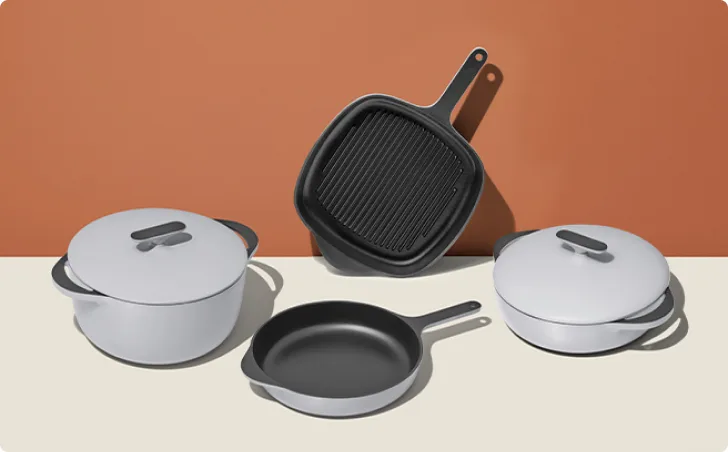
Enameled cast iron offers several benefits that make it an attractive choice for both novice and experienced cooks.
Let’s explore some of the key advantages:
One of the biggest benefits of enameled cast iron is its non-reactive surface. The enamel coating prevents the cast iron from reacting with acidic ingredients, which means you can cook tomato-based sauces, citrus marinades, and other acidic dishes without worrying about off-flavors or damage to the cookware.
The enamel coating on high-quality enameled cast iron creates a naturally slick surface that is resistant to sticking. While it may not be as non-stick as Teflon ® or ceramic cookware, it still offers a smoother cooking experience than traditional cast iron, which requires regular seasoning to maintain its slick properties.
Enameled cast iron retains the excellent heat retention and distribution properties of traditional cast iron on any cooktop. This means that your food will cook evenly, with fewer hot spots. Whether you’re searing a steak or simmering a stew, enameled cast iron ensures that your food is cooked to perfection.
Cleaning enameled cast iron is a breeze compared to traditional cast iron. The smooth enamel surface is less prone to sticking, which means you won’t have to scrub as hard to remove food residue and cooking oil.
Enameled cast iron is incredibly versatile. It can be used on the stovetop, in the oven, and even under the broiler, making it the best cookware for just about any kitchen. This versatility allows you to use the same piece of cookware for a variety of cooking methods, from sautéing to baking. Plus, its attractive appearance means you can take it straight from the oven to the table, making it perfect for serving.
Safety is a big consideration when choosing cookware, and enameled cast iron is no exception. The good news is that enameled cast iron is generally considered safe for cooking.
The enamel coating is made from glass and does not contain harmful chemicals like PFOA or PTFE , which are found in some non-stick coatings. As long as the enamel remains intact and free from chips or cracks, enameled cast iron is a safe and reliable choice for your kitchen.
While enameled cast iron is generally safe, there are a few safety concerns to be aware of. Understanding these potential issues can help you use and care for your cookware properly, ensuring it remains safe for years to come.
One concern with enameled cast iron is the potential presence of lead or cadmium in the enamel coating. These heavy metals were historically used in some pigment formulations, particularly to achieve bright reds, oranges, and yellows.
The chemistry behind those vivid colors often relied on cadmium-based pigments, which is why interior colors matter when you're evaluating safety. The FDA sets leach limits for ceramic and enameled surfaces at 3.0 µg/mL for lead and 0.5 µg/mL for cadmium, measured using ASTM-C738 and ASTM-C872 test methods (4% acetic acid boiled for 2 hours, then analyzed).
In 2023, the FDA updated its guidance to prohibit any detectable leachable lead in cookware. California Prop 65 sets even stricter thresholds at roughly 10x below the federal baseline: 0.1 mg/L for lead and 0.049 mg/L for cadmium.
At Caraway, our enameled cast iron is third-party tested for 20+ heavy metals and fully complies with California AB1200 , the state's cookware-specific disclosure law.
We use lighter interior enamels (cream and sand tones) because they consistently test lowest for heavy metal leaching, regardless of what's happening on the exterior. The interior cooking surface is what actually touches your food, so that's the surface that matters most.
PFAS (per- and polyfluoroalkyl substances) are a group of synthetic chemicals nicknamed "forever chemicals" because they don't break down in the environment or in the body. PFOA and PTFE (the polymer behind traditional Teflon-style nonstick coatings) are two of the most well-known examples.
Concerns around long-term exposure have driven a wave of state-level bans, with Minnesota, Colorado, and Maine all now restricting PFAS in cookware. The good news with enameled cast iron is that it's inherently free from PFAS because the coating is fused glass, not a synthetic polymer.
There's no PFAS chemistry involved at any stage of production. Our Enameled Cast Iron Collection is third-party tested for 200+ PFAS compounds and is verified PFAS-, PTFE-, and PFOA-free. We also use recycled materials in the cast iron core, which keeps the production footprint lower than virgin iron alternatives.
One quick distinction worth noting: enameled cast iron is a different category of cookware than ceramic nonstick. Both are PFAS-free at Caraway, but the materials and use cases differ. Enameled cast iron is mineral glass on iron. Ceramic nonstick is a mineral-based coating on aluminum.
Enameled cast iron is inherently free from PFAS because the coating is fused glass, not a synthetic polymer.
It depends entirely on where the damage is and how bad it is. Here's how to evaluate it:
Hairline crazing (fine surface lines): Cosmetic only. Safe to keep using.
Interior staining or discoloration: Cosmetic. Doesn't affect safety or performance.
Small chips on the interior cooking surface: Stop cooking acidic foods, which can react with any exposed iron. Continue using for low-acid dishes, but plan to replace if the chip is in the primary food-contact zone.
Significant interior chips with exposed cast iron: Time to replace. The exposed metal can rust and react with food.
Exterior chips: Lower priority since there's no food contact, though heavy damage may indicate a structural issue.
Our Enameled Cast Iron Collection comes with a lifetime warranty because this kind of cookware should genuinely last for generations.
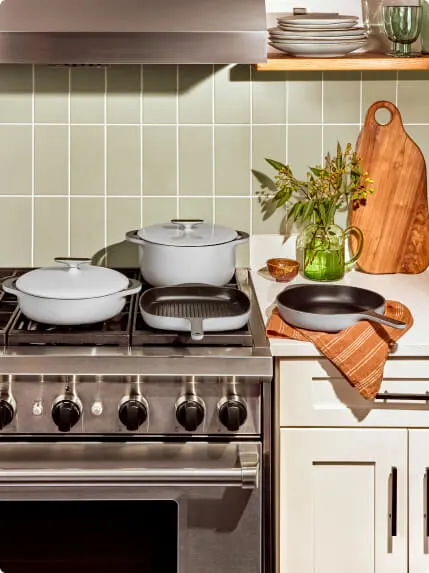
Thermal shock occurs when cookware experiences a sudden and extreme change in temperature, which can cause the enamel to crack or chip.
For example, placing a hot enameled cast iron pan into cold water can result in thermal shock. To avoid this, always allow your enameled cast iron to cool gradually before cleaning it. Additionally, avoid using enameled cast iron on high heat settings, as this can also contribute to thermal shock and damage the enamel.
While enameled cast iron is durable, it’s not immune to chipping and scratching. Dropping the cookware or using metal utensils can damage the enamel, compromising its naturally slick properties and potentially exposing the cast iron beneath.
Caraway’s enameled cast iron is resistant to chipping, making it a more durable option. To protect your enameled cast iron, use silicone or wooden utensils and handle the cookware with care. Avoid stainless steel utensils, as these can scratch the enameled cooking surface.
Our enameled cast iron is oven safe up to 500°F, which covers the vast majority of recipes you'd ever make. It's also compatible with every stovetop type, including induction, gas, and electric.
A few important things to avoid:
Open flames. Don't use enameled cast iron over campfires, charcoal grills, or any direct flame source. The intensity of an open flame can damage the enamel coating.
Prolonged empty heating. Sustained dry heat (an empty pan left on a hot burner for extended periods) can weaken the enamel over time. This is different from thermal shock, which happens during rapid temperature changes.
When in doubt, preheat slowly and add food or liquid before the pan gets too hot.
Not all enameled cast iron is built (or tested) to the same standards. Here's what actually matters when you're shopping:
Third-party testing transparency. Look for brands that publish specific compounds tested and the results, not just vague "non-toxic" claims.
FDA and California Prop 65 compliance. These are the most rigorous regulatory standards in the U.S. Brands that comply with both are taking heavy metal safety seriously.
CA AB1200 compliance. California's cookware-specific disclosure law requires brands to report any chemicals of concern. Compliance signals a higher level of transparency.
Lighter interior enamel color. Cream, sand, and white interiors consistently test lowest for heavy metals because they don't rely on cadmium-based pigments for color.
Established brand with a track record. Older enamel formulations from certain heritage brands have raised heavy metal concerns. Newer, transparent manufacturers tend to use cleaner pigment chemistry.
Explicit disclosure. Brands should clearly state lead, cadmium, PFAS, PTFE, and PFOA status. If they won't say, that's a flag.
Lifetime warranty or replacement policy. Quality cookware is built to last and the warranty should reflect that.
Materials transparency. Recycled content, country of manufacture, and supply chain details are all signs of a company taking accountability seriously.
Proper care and maintenance are essential for keeping your enameled cast iron cookware safe and in good condition.
Here are some tips to help you get the most out of your investment:
Always hand wash your enameled cast iron with warm, soapy water and a soft sponge. Avoid using abrasive scrubbers or harsh cleaning agents, as these can scratch the enamel.
If you have stubborn food residue, soak the cookware in warm water before gently scrubbing. While some enameled cast iron is dishwasher-safe, hand washing is recommended to prolong the life of the enamel.
When handling your enameled cast iron, be mindful of its weight and delicate enamel coating. Avoid dropping the cookware or banging it against hard surfaces, as this can cause chips or cracks. When storing, place a soft cloth or paper towel between stacked pieces to prevent scratches.
To avoid damaging your enameled cast iron, always preheat the cookware slowly over low to medium heat . This helps prevent thermal shock and ensures even heating. Additionally, avoid using metal utensils, which can scratch the enamel. Opt for wooden, silicone, or nylon utensils instead.
No. Properly manufactured enameled cast iron is non-toxic when the enamel coating is intact and the brand complies with FDA and Prop 65 standards. The coating itself is fused glass, which acts as a mineral barrier between food and the iron core. Caraway's enameled cast iron is third-party tested for 200+ PFAS compounds and 20+ heavy metals.
It depends on your needs. Enameled cast iron is non-reactive, requires no seasoning, and doesn't transfer iron into food. Raw cast iron is great for high-heat searing and can contribute dietary iron, but it reacts with acidic ingredients and requires regular maintenance.
Quality enameled cast iron from transparent brands does not contain detectable leachable lead. The FDA prohibits detectable leachable lead in cookware as of 2023. Older or unregulated enamel formulations may have contained lead in pigments, particularly bright reds and yellows.
Yes. This is one of the biggest advantages over raw cast iron. The enamel coating creates a non-reactive surface, so tomato sauces, wine reductions, lemon-based dishes, and vinegar marinades are all completely fine.
Yes, up to 500°F for Caraway's Enameled Cast Iron Collection. That covers basically every oven recipe you'd want to make, from braises to bread to roasts.
Technically yes for most brands, but hand washing is strongly recommended. Dishwashers can dull the enamel finish over time. Warm soapy water and a soft sponge keeps the surface looking new.
Decades with proper care. This is heirloom cookware, designed to last for generations. Our enameled cast iron comes with a lifetime warranty because we genuinely believe it should outlive most of what's in your kitchen.
Enameled cast iron is a safe and versatile option for any kitchen. Its non-reactive surface, easy maintenance, and attractive appearance make it a popular choice among home cooks and professional chefs alike. Care for your cookware properly, and it will serve you well for years.
Sources: PFOA, PFOS, and Related PFAS Chemicals | American Cancer Society
PTFE-coated non-stick cookware and toxicity concerns: a perspective | NCBI
Use Proper Cooking Temperatures to Ensure Safe Food | MN Dept. of Health
Toxic Metal - an overview | ScienceDirect Topics
Lead in Food and Foodwares | FDA
California AB1200 Cookware Disclosure | CA Attorney General
Get started with the Caraway essentials!
Free Shipping On Orders $90+
Free Returns
30-Day Trial