Spend $675 to unlock your gift!
$0
$90
Free Shipping
$675
Baking Sheet Duo
($120 Value)
Your Cart is Empty
Get started with the Caraway essentials!
Free Shipping On Orders $90+
Free Returns
30-Day Trial
Home & Kitchen with Caraway
Key Takeaways
Stainless steel is one of the most durable cookware materials you can buy, with quality pieces lasting decades when properly cared for.
Its non-reactive surface, high-heat tolerance, and oven-to-stovetop versatility make it a go-to for searing, browning, and building flavor.
The main trade-offs are a learning curve around sticking and the need for a bit more technique than nonstick cookware requires.
If you're weighing whether to invest in stainless steel cookware, the honest answer is: it depends on how you cook. Stainless steel is a workhorse. It sears like a dream, handles acidic foods without fuss, and can last for decades. But it also has a learning curve that nonstick doesn't, and it's not the right pan for every single meal.
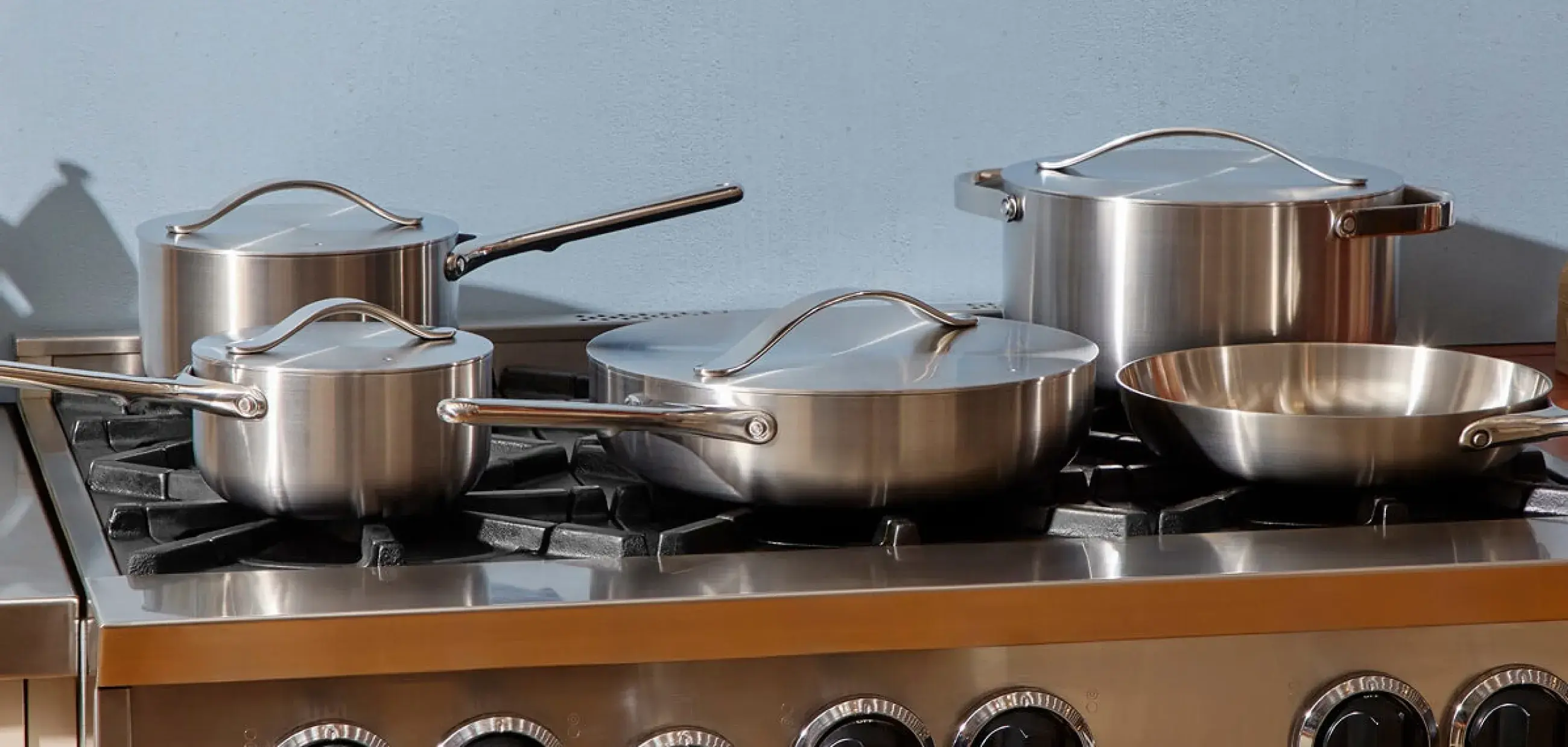
At Caraway , we make both ceramic and stainless steel because we think most home cooks benefit from having both. Our 5-ply Stainless Steel Cookware Set is built for the meals where you want serious heat, real browning, and cookware you'll still be using in 20 years. Ceramic handles the low-heat, easy-release stuff.
Let's break down the pros and cons of stainless steel so you can decide where it fits in your kitchen.
Stainless steel is an alloy made primarily from iron, chromium, and nickel . The most common food-grade version is 304 stainless steel (often labeled 18/10 or 18/8), which contains 18% chromium and 8–10% nickel. Chromium is what gives the pan its corrosion resistance. Nickel adds strength and improves the surface's durability over time.
Because stainless steel alone doesn't conduct heat all that well, most quality pans use a multi-ply construction that layers stainless steel around a conductive core (usually aluminum or copper). Our stainless steel is 5-ply, which means an aluminum core is sandwiched between multiple layers of stainless steel for even, responsive heat distribution across the entire pan.
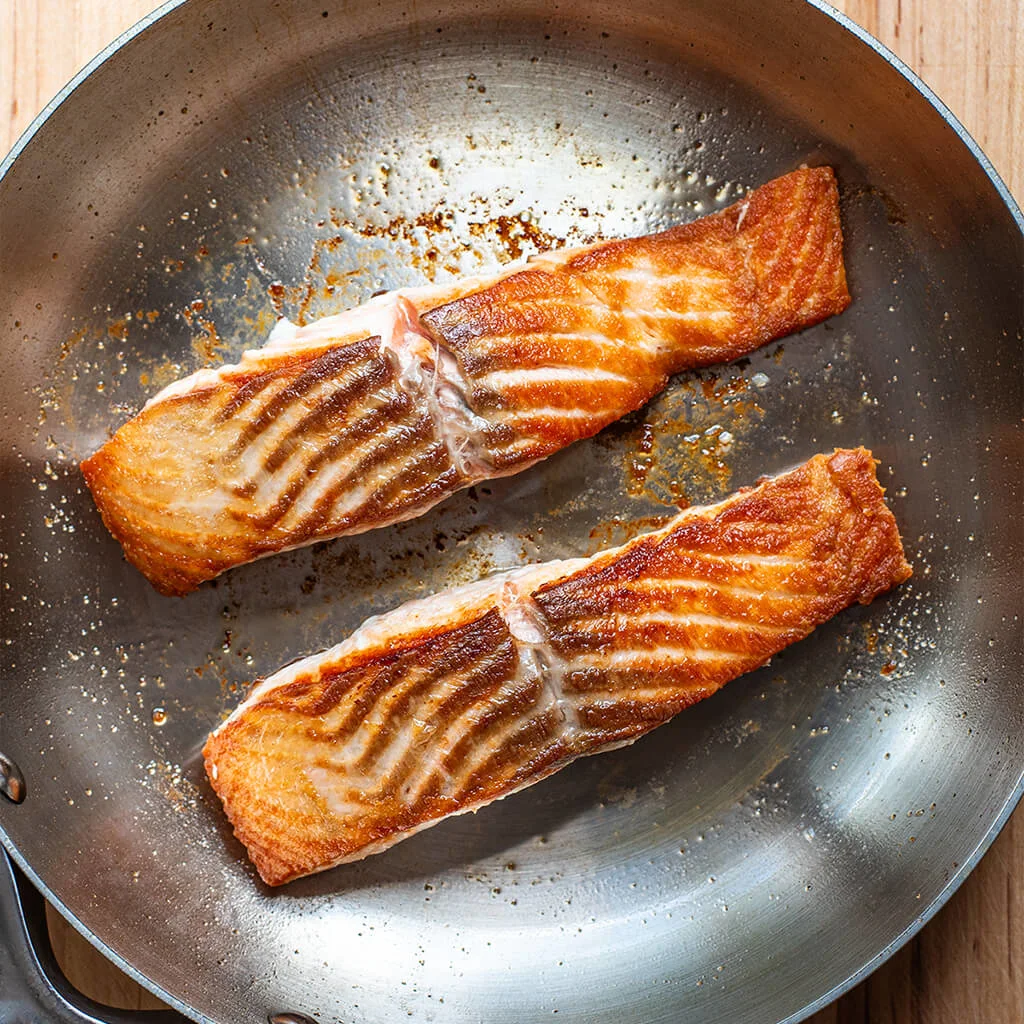
Stainless steel has earned its place in professional kitchens and home kitchens for good reason.
Here's what makes it worth considering.
This is the big one. Stainless steel is one of the most durable cookware materials you can buy. It resists warping, scratching, and denting in ways that nonstick and cast iron can't match. There's no coating to wear down, no seasoning to maintain, no re-coating required.
With basic care, a quality stainless steel pan can outlast most other kitchen equipment you own. Our Stainless Steel Cookware comes with a Limited Lifetime Warranty because it's genuinely built to last.
Stainless steel is non-reactive, which means it won't interact with acidic foods like tomato sauce, wine reductions, lemon-based marinades, or vinegar-heavy dishes. Some materials (like uncoated aluminum or copper) can impart a metallic taste when acidic ingredients are cooked in them. Stainless steel keeps flavors clean.
If you want a real sear on a steak, crispy skin on chicken thighs, or beautifully browned mushrooms, stainless steel is the tool for the job. It gets hot, stays hot, and handles temperatures that ceramic and traditional nonstick can't safely tolerate. Our 5-ply stainless steel is oven-safe up to 550°F , which covers almost any recipe you'd want to make.
This is one of stainless steel's most underrated advantages. Because it can handle both direct flame and high oven temperatures, you can sear a protein on the stovetop and finish it in the oven without dirtying a second pan. Frittatas, skillet cornbread, bone-in chicken thighs, whole roasted fish. Stainless steel handles them all, from start to finish.
Gas, electric, induction. It all works. Our 5-ply construction is fully induction-compatible, unlike cheaper multi-ply pans. If you move or renovate your kitchen down the line, stainless steel comes with you.
There's no coating that can wear down. No seasoning routine. No panicked search for wooden utensils. Stainless steel takes what you give it. If food sticks, you can scrub. If it discolors from heat, a little Bar Keepers Friend restores the shine. It's a low-drama material.
Stainless steel doesn't rely on any synthetic nonstick coating to release food. That means no PFAS, PTFE, or PFOA are involved in its construction. Our stainless steel is third-party tested to confirm this.
Stainless steel isn't perfect. Here's the honest side of it.
This is the number one thing that trips up new stainless steel users. Food sticks when the pan isn't properly preheated, when there isn't enough oil, or when cold food hits a warm pan.
The Leidenfrost effect (the phenomenon where water droplets form beads and dance across a properly heated pan) is your green light for cooking, and learning to read it takes some practice. If you're used to nonstick, there's a real transition period.
Because stainless steel doesn't have a nonstick coating, you'll need enough oil to fully coat the cooking surface. That's typically 1 to 2 tablespoons for a 10.5-inch fry pan. If you're specifically trying to reduce added fats in your cooking, ceramic-coated cookware (like our Fry Pan ) requires less.
A few foods are genuinely difficult in stainless steel. Delicate eggs, sticky starches like fresh pasta, and flaky white fish all tend to stick even when you do everything right. These foods are much easier to cook in a ceramic pan. Stainless steel excels at higher-heat, sear-forward cooking. Save the delicate stuff for a different pan.
Even with a conductive core, stainless steel takes a couple of minutes to preheat properly. If you're used to a lightweight aluminum pan, the extra wait can feel like a lot. It's not a dealbreaker (and the trade-off is much better heat retention), but it's worth knowing.
This is the concern that gets the most attention online, so it's worth addressing honestly. Research on nickel and chromium migration from stainless steel cookware has shown that trace amounts can leach into food, particularly when cooking acidic ingredients for extended periods. New stainless steel pans leach more than seasoned ones, and leaching stabilizes significantly after about six cooking cycles.
The amounts detected in that research were well under the tolerable daily intake for nickel established by regulatory bodies. However, people with diagnosed nickel allergies may want to be extra mindful. If that's you, look for 316-grade stainless steel or ceramic alternatives.
Quality stainless steel is more expensive than cheaper nonstick pans. But because it lasts decades rather than years, the cost-per-use is much lower. It's an investment purchase, not a disposable one.
Stainless steel is a great fit if you:
Love searing meats and want restaurant-level browning at home
Cook a lot of acidic dishes (marinara, wine reductions, chili, curries)
Want cookware that goes from stovetop to oven without switching pans
Value long-term durability over convenience
Are willing to learn a bit of technique to unlock the full potential
Cook on induction (5-ply stainless is one of the best induction options out there)
It might not be your everyday pan if you:
Cook a lot of eggs, pancakes, or delicate fish
Prefer minimal-effort cleanup
Want zero learning curve
Are trying to significantly reduce added fats
Realistically, most home cooks do best with both stainless steel and ceramic in their kitchen. Reach for stainless when you want to sear. Reach for ceramic when you want easy release.
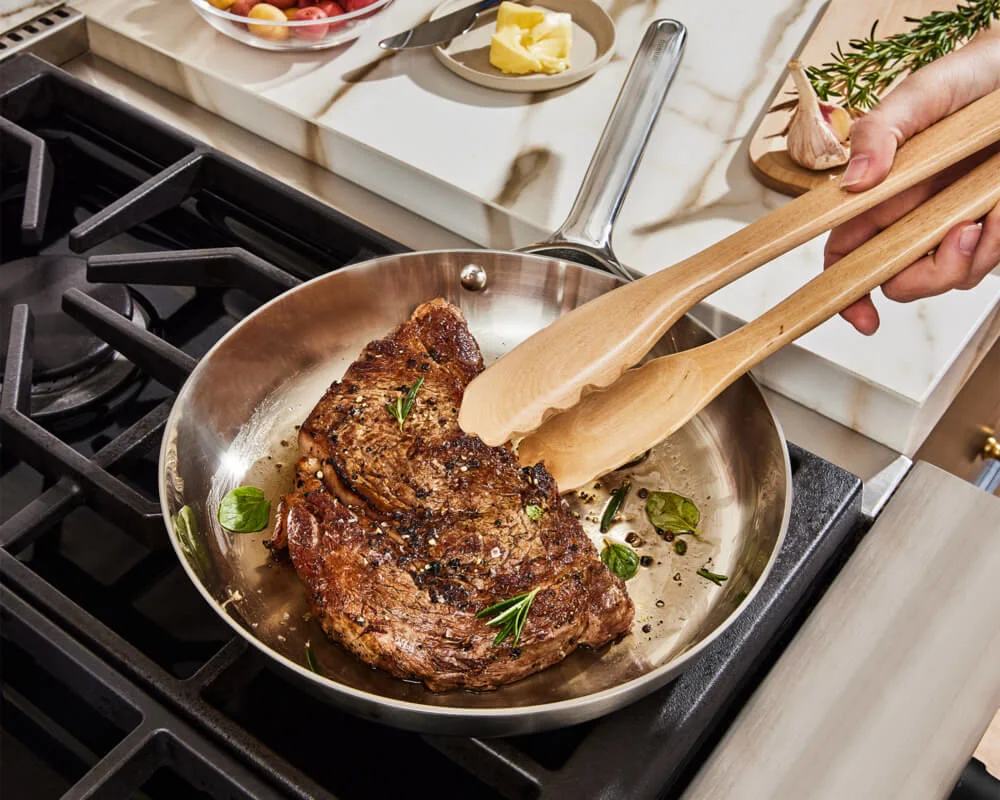
A few habits that make a real difference:
Preheat the empty pan for 2 to 3 minutes on medium before adding oil.
Run the water test. If water droplets form small balls that dance across the surface, the pan is properly heated at around 370°F.
Use a high-smoke-point oil. Avocado, refined grapeseed, and ghee all handle the heat well. Save butter for finishing or lower-heat cooking.
Bring proteins to room temperature before cooking. Cold food crashes the pan's temperature and causes sticking.
Wait for the natural release. If food is stuck, it's not ready to flip yet. Give it another 30 to 60 seconds.
Deglaze while the pan is still warm. A splash of wine, stock, or water lifts everything and gives you a built-in pan sauce.
Stainless steel isn't the easiest cookware to master, but it's one of the most rewarding to own. Once you understand how heat and moisture work together, it becomes second nature, and you end up with cookware that outlasts basically everything else in your kitchen.
If you want a pan that handles high heat, acidic foods, and years of daily use without complaint, stainless steel earns its place.
It can be, but it takes a little patience. The learning curve is real, especially around preheating and sticking. Beginners who cook simple proteins and vegetables usually adjust within a few weeks. If you're cooking eggs, pancakes, or delicate fish regularly, ceramic-coated cookware will be easier to start with.
Small amounts of nickel and chromium can migrate from stainless steel into food, especially during long cooking with acidic ingredients such as tomato sauce. Studies show that metal leaching drops significantly after the first several cooking cycles and stays well below regulatory intake limits with normal use.
Yes, but hand washing extends its life. Dishwasher detergents are harsher than dish soap and can gradually dull the finish. If you want your cookware to look new for decades, hand-wash it.
Flick a few drops of water into the pan. If they sizzle and disappear, it's too cold. If they sputter and evaporate instantly, it's too hot. If they form mercury-like beads that dance across the surface, you've hit the Leidenfrost effect, and the pan is ready.
It depends on what you're cooking. Stainless steel is better for high-heat searing, browning, deglazing, and building flavor. Nonstick (specifically ceramic-coated nonstick) is better for delicate proteins, easy cleanup, and everyday low-heat cooking. Most cooks benefit from having both.
Sources:
Leidenfrost Effect - an overview | ScienceDirect Topics
Introduction to stainless steels | Worldstainless
What Is the Difference Between Non-Reactive and Reactive Cookware? | The Spruce Ea
Spend $675 to unlock your gift!
$90
Free Shipping
$675
Baking Sheet Duo
($120 Value)
Get started with the Caraway essentials!
Free Shipping On Orders $90+
Free Returns
30-Day Trial
Spend $675+ to unlock your free gift!
Exclusive Baking Sheet Duo for orders $675+
$90
Free Shipping
$675
Baking Sheet Duo
($120 Value)
Spend $675+ to unlock your free gift!
Exclusive Baking Sheet Duo for orders $675+
$90
Free Shipping
$675
Baking Sheet Duo
($120 Value)
